Author name: iamwaseem332@gmail.com

RAG Versus Fine-Tuning
Artificial Intelligence

RAG Versus Fine-Tuning

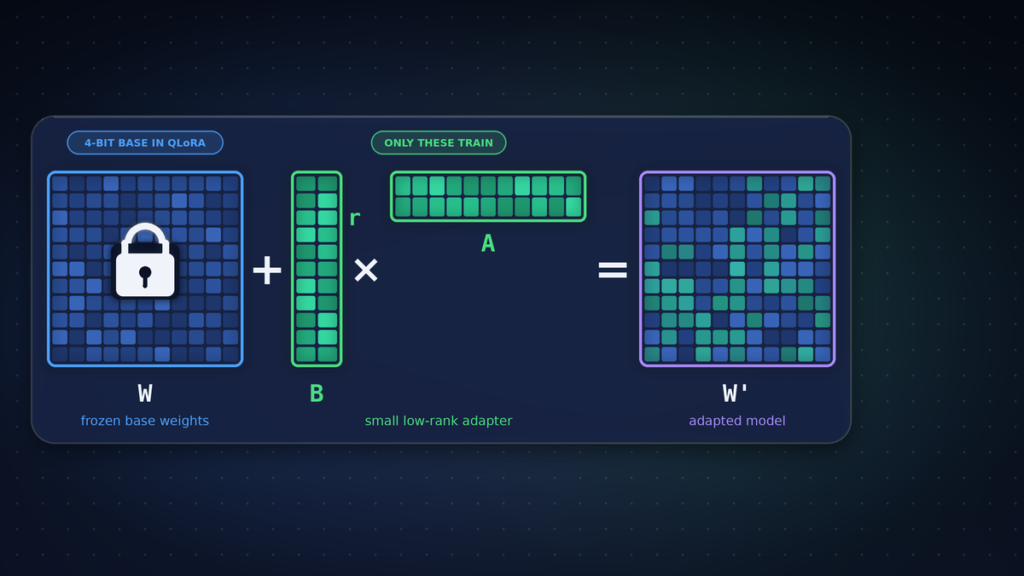
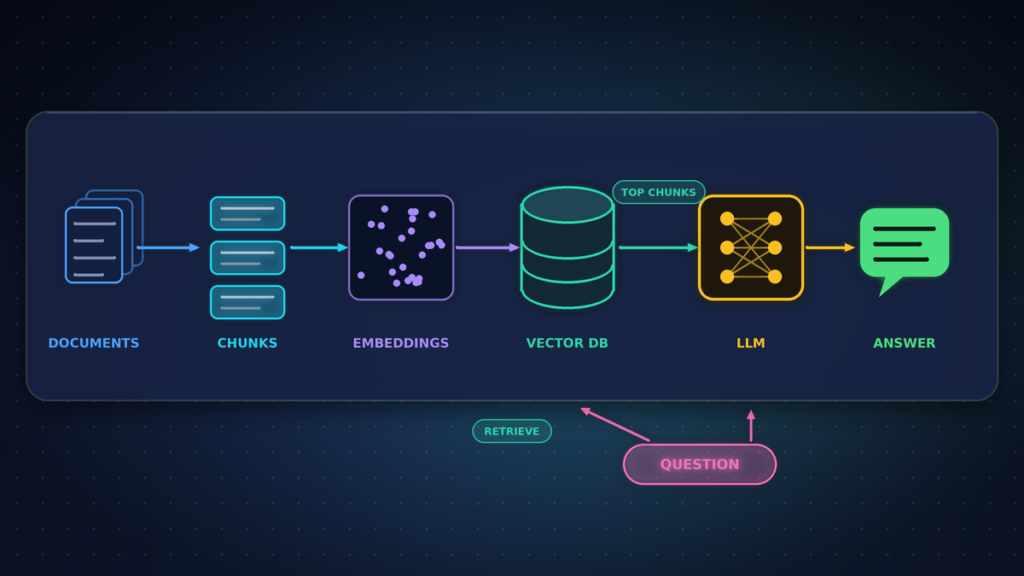
Introduction Let’s talk about RAG versus fine-tuning. Now they’re both powerful ways to enhance the capabilities of large language models, but today you’re going to learn about their strengths, their use cases, and how you can choose between them. So one of the biggest issues with dealing with generative AI right now is one enhancing the models, but also to dealing with their limitations. For example, I just recently asked my favorite llm a simple question, who won the Euro 2024 World Championship, and while this might seem like a simple query for my model, well there’s a slight issue because the model wasn’t trained on that specific information. It can’t give me an accurate or up-to-date answer. At the same time these popular models are very generalistic, and so how do we think about specializing them for specific use cases and adapt them in Enterprise applications. Because your data is one of the most important things that you can work with, and in the field of AI using techniques such as rag or fine-tuning will allow you to supercharge the capabilities that your application delivers. So in the next few minutes we’re going to learn about both of these techniques, the differences between them, and where you can start seeing and using them in. Let’s get started. Retrieval Augmented Generation (RAG) So let’s begin with retrieval augmented generation, which is a way to increase the capabilities of a model through retrieving external and up-to-date information, augmenting the original prompt that was given to the model, and then generating a response back using that context and information. And this is really powerful because if we think back about that example of with the Euro Cup, well the model didn’t have the information in context to provide an answer, and this is one of the big limitations of llms. But this is mitigated in a way with rag because now instead of having an incorrect or possibly a hallucinated answer, we’re able to work with what’s known as a corpus of information. So this could be data, this could be PDFs, documents, spreadsheets, things that are relevant to our specific organization or knowledge that we need to specialize in. So when the query comes in this time, we’re working with what’s known as a retriever that’s able to pull the correct doc doents and Rel relative context to what the question is, and then pass that knowledge as well as the original prompt to a large language model. And with its intuition and pre-trained data, it’s able to give us a response back based on that contextualized information, which is really really powerful because we can start to see that we can get better responses back from a model with our proprietary and confidential information without needing to do any retraining on the model. And this is a great and popular way to enhance the capabilities of a model without having to do any fine-tuning. Fine-Tuning So as the name implies, what this involves is taking a large language foundational model, but this time we’re going to be specializing it in a certain domain or area. So we’re working with labeled and targeted data that’s going to be provided to the model, and and when we do some processing, we’ll have a specialized model for a specific use case to talk in a certain style, to have a certain tone that could represent our organization or company. And so then when a model is queried from a user or any other type of way, we’ll have a a response that gives the correct tone and output or specialty in a domain that we’d like to receive. And this is really important because what we’re doing is essentially baking in this context and intuition into the model. And it’s really important because this is now part of the model’s weights versus being supplemented on top with a a technique like rag. Strengths and Weaknesses of RAG and Fine-Tuning Okay so we understand how both of these techniques can enhance a model’s accur output and performance, but let’s take a look at their strengths and weaknesses in some common use cases because the direction that you go in can greatly affect a model’s performance, its accuracy outputs, compute cost, and much much more. So let’s begin with retrieval augmented generation, and something that I want to point out here is that because we’re working with a corpus of information and data, this is perfect for dynamic data sources such as databases and other data repositories where we want to continuously pull information and have that up to date for the model to use understand. And at the same time because we’re working with this retriever system and passing in the information as context in the prompt, well that really helps with hallucinations, and providing the sources for this information is really important in systems where we need trust and transparency when we’re using AI. So this is fantastic. But let’s also think about this whole system because having this efficient retrieval system is really important in how we select and pick the data that we want to provide in that limited context window. And so maintaining this is also something that you need to think about. And at the same time what we’re doing here in this system is effectively supplementing that information on top of the model, so we’re not essentially enhancing the base model itself, we’re just giving it the relative and contextual information it needs. Fine-Tuning Strengths and Limitations Versus fine-tuning is a little bit different because we’re actually baking in that context and intuition into the model. Well we have greater influence in essentially how the model behaves and reacts in different situations. Is it an insurance adjuster, can it summarize documents, whatever we want the model to do, we can essentially use fine tuning in order to help with that process. And at the same time because

Non-Linearity in Neural Networks?
Artificial Intelligence, Neural Networks

Why Do We Need Non-Linearity in Neural Networks?

Neural networks are designed to solve problems that normal computer programs and simple mathematical models cannot handle easily. They help machines learn from data and make smart decisions, such as recognizing images, understanding speech, or predicting results. However, neural networks can only perform these tasks successfully when they can learn complex patterns. This is why non-linearity in neural networks plays a very important role. Without non-linearity, a neural network becomes too simple and cannot understand real-world data properly. Why Do We Need Non-Linearity in Neural Networks? Neural networks are one of the most powerful tools in artificial intelligence. They help machines recognize faces, understand speech, translate languages, and even detect diseases. But one question confuses many beginners: Why do we need non-linearity in neural networks? The simple answer is: Without non-linearity, a neural network becomes almost useless because it cannot learn complex patterns. In this article, you will understand non-linearity in the easiest way, with examples and real-world explanations. What Does Non-Linearity Mean? Non-linearity means the output does not increase in a straight-line relationship with the input. If you increase something step by step and the result increases in the same way, that is linear. For example, if 1 hour of work gives you $10, then 2 hours gives you $20, and 3 hours gives you $30. This is a straight-line pattern. In real life, many things do not follow a straight line. For example, when you heat water, it stays liquid for a long time, but at 100°C, it suddenly turns into steam. That is non-linear behavior. Most real-world problems like image recognition, language translation, and disease prediction are non-linear. What is an Activation Function? In neural networks, we add non-linearity using something called an activation function. An activation function is a mathematical function that decides: Should this neuron activate strongly, weakly, or not at all? Popular activation functions include ReLU (Rectified Linear Unit), Sigmoid, Tanh, and Softmax. These functions help neural networks learn complicated relationships. Why Neural Networks Need Non-Linearity (Main Reason) The biggest reason is simple: Without non-linearity, neural networks can only learn straight-line patterns. Even if you add many layers, the network still behaves like a single layer. This means it cannot solve complex problems. What Happens If We Remove Non-Linearity? To understand this, let’s look at what happens when we use only linear functions. A neuron usually works like this: Output = (weights × inputs) + bias. This is a linear equation. Now imagine a network with multiple layers but no activation function. Layer 1: y = W1x + b1. Layer 2: z = W2y + b2. Substitute y into layer 2: z = W2(W1x + b1) + b2. z = (W2W1)x + (W2b1 + b2). This is still a linear equation. So even if you use 10 layers, the final output remains linear. A deep network without activation functions behaves like a simple linear model, so it cannot learn complex shapes or decision boundaries. Real Life Example: Why Linear Models Fail Imagine you want a neural network to separate two groups of points. If the points can be separated using a straight line, a linear model can solve it. But many datasets cannot be separated using a straight line. A good example is the famous XOR problem. The XOR Problem The XOR problem is one of the most famous reasons why non-linearity matters. XOR logic works like this: if both inputs are the same, the output is 0, and if the inputs are different, the output is 1. A linear model cannot solve XOR because no single straight line can separate output 1 from output 0. But a neural network with a non-linear activation function can solve it easily. This happens because non-linearity allows the network to create curved boundaries instead of straight lines. Non-Linearity Helps Neural Networks Learn Complex Patterns Most real-world tasks need the network to learn patterns like curves, circles, waves, and irregular shapes. For example, an image contains pixels, shadows, edges, and textures. A linear model cannot understand these complex features properly. But a neural network with non-linearity can learn edge detection, object shape, facial features, and background difference. This is why deep learning works so well in computer vision. Non-Linearity Makes Deep Learning Powerful Deep learning means using many hidden layers. But layers only become useful when they learn different types of features. For example, a deep neural network learns a cat image step by step. The first layer learns edges, the second layer learns shapes like circles and curves, the third layer learns eyes, ears, and tail, and the final layer recognizes the cat. This learning becomes possible only because activation functions add non-linearity. Without non-linearity, each layer would repeat the same type of learning. Non-Linearity Creates Better Decision Boundaries A decision boundary is the line or shape that separates one class from another. A linear model creates a straight-line decision boundary. But a neural network with non-linearity can create curves, circles, and complex shapes. This makes neural networks powerful for classification problems like spam vs not spam, cancer vs non-cancer, dog vs cat, and fraud vs normal transactions. Non-Linearity Helps Neural Networks Approximate Any Function One important idea in deep learning is that neural networks can approximate almost any function. This is called the Universal Approximation Theorem. But this is only true if we use non-linear activation functions. If the network stays linear, it cannot represent complex functions. Non-linearity helps the network behave like a flexible system that can model almost any real-world relationship. Why Can’t We Use Only One Non-Linear Layer? You may ask: If one non-linear layer is enough, why do we need many layers? The answer is simple: deep networks learn better and faster for complex tasks. Many layers allow the network to break a hard problem into smaller parts. This is similar to how humans solve complex problems step by step. Each layer learns a small part, and together they solve the full problem. Common Activation Functions That Add Non-Linearity ReLU (Rectified

perceptron
Artificial Intelligence, Neural Networks

What is Perceptron? Single and Multilayer Perceptron

Perceptron A perceptron is one of the earliest and simplest models in machine learning. It is a model that tries to copy the basic behavior of a biological neuron. In biology, a neuron receives signals from other neurons, processes those signals, and then produces its own signal. A perceptron follows the same idea. It receives numerical inputs, multiplies each input by a weight, adds a bias, and then makes a final decision using an activation function. Even though the perceptron is simple, it is very important. It is the building block of many neural network models used today. Without the perceptron, we would not have multilayer perceptrons, deep learning, or modern neural networks. What is a Perceptron? A perceptron is a machine learning model that takes several input values, processes them, and produces a single output. You can imagine a perceptron as a single artificial neuron. The perceptron works by performing the following steps. First, it receives input values. These are usually numbers that represent features of data. For example, if you are trying to classify emails as spam or not spam, your inputs might be numbers that represent words, frequency, or length of the email. Second, each input has a weight. A weight tells the perceptron how important that particular input is. If an input has a high weight, it influences the final decision more strongly. Third, the perceptron multiplies each input by its weight and adds all of these together. It also adds a bias. The bias helps the perceptron shift the decision boundary. Fourth, it uses an activation function. In the original perceptron model, the activation function is a step function. If the total sum is larger than zero, the perceptron outputs one. If the total sum is smaller than or equal to zero, it outputs zero. This means the perceptron performs binary classification. Because the perceptron uses a straight boundary to divide classes, it can only solve problems where the data is linearly separable. If the data requires a curved or complex boundary, the perceptron fails. This limitation is one of the major reasons why researchers moved toward deeper networks. What is a Single Layer Perceptron A single layer perceptron contains only one layer of trainable units. It has an input layer and one output layer. The input layer only passes data forward. The output layer contains one or more perceptrons that make decisions. A single layer perceptron can perform tasks such as simple binary classification and basic pattern recognition. However, it cannot solve problems where the classes overlap in a non linear pattern. For example, it cannot solve the XOR problem because XOR needs a curved boundary and a single perceptron can only draw a straight line as the separating boundary. Even though this model is limited, it is very useful for understanding the foundations of neural networks. It introduces the concepts of training, weights, bias, activation, and linear separation. What is a Multilayer Perceptron in Machine Learning A multilayer perceptron, often called MLP, is a neural network that contains more than one layer of perceptrons. It has an input layer, one or more hidden layers, and an output layer. Each layer contains several neurons that transform the data. The hidden layers allow the network to learn patterns that are non linear and complex. This is the major difference between a single layer perceptron and a multilayer perceptron. When you add hidden layers and use non linear activation functions, the model becomes much more powerful. It can learn curved boundaries, abstract features, and high level patterns. Because of these extra layers, the multilayer perceptron can solve many problems that a single layer perceptron cannot. Tasks such as image recognition, voice detection, digit classification, and many classical machine learning problems can be solved with multilayer perceptrons. How a Multilayer Perceptron Works A multilayer perceptron has a very clear workflow. This workflow contains two major parts. The first part is forward propagation. The second part is backward propagation with optimization. In forward propagation, the network takes the input data and passes it forward through each layer. At each neuron, the model multiplies the inputs by their weights, adds a bias, and applies an activation function. The activation function introduces non linearity. Without it, multiple layers would still behave like a single linear model. The output of the first hidden layer becomes the input of the next hidden layer. This continues until the data reaches the output layer. The output layer produces the final prediction. If the task is classification, the output may represent class probabilities. If the task is regression, the output may represent a numerical value. After the output is produced, the network calculates the error using a loss function. The loss function measures how far the prediction is from the correct value. Now the second part begins. Backward propagation uses the error and sends it backward through the network. It calculates how much each weight and bias contributed to the error. This is done using the chain rule from calculus. The network then updates the weights in a direction that reduces the error. This process is called gradient descent or an improved version such as Adam, RMSProp, or others. Through many cycles of forward and backward propagation, the multilayer perceptron slowly learns the correct patterns. It adjusts itself until it becomes good at making predictions. Why Multilayer Perceptrons Are Powerful A multilayer perceptron becomes powerful because each hidden layer learns a different type of feature. The first hidden layer learns simple features such as small patterns. The next hidden layer learns combinations of these patterns. Deeper layers learn more abstract representations. This layered learning allows the network to approximate very complex functions. In fact, the universal approximation theorem states that a neural network with at least one hidden layer and non linear activation functions can approximate almost any function to any desired accuracy. This is why multilayer perceptrons are widely used in many fields. They are used in classification, regression, forecasting, signal processing, image

Artificial Intelligence, Summaries of Research papers

Summary of Research paper”The use of large-scale AI models and deep learning techniques in neuroscience”

This paper reviews how modern large-scale AI models, especially big neural networks and deep learning systems, are being applied to neuroscience, the study of the brain and nervous system. It looks at many areas where AI helps, including brain imaging, brain-computer interfaces, analyzing molecular and genetic data, medical diagnosis, and studying neurological and psychiatric diseases. Instead of performing a single experiment, the work surveys many recent studies and shows how AI is changing the way researchers study the brain. The paper highlights several important points: AI helps process complex brain data. Neuroscience produces large amounts of data such as brain scans, EEG or MEG signals, and genetic information. Traditional methods struggle to analyze this data, but big AI models can process it from raw form to meaningful results. For example, AI can detect subtle patterns in brain imaging which can lead to earlier or more accurate diagnosis of diseases. AI enables better integration of different types of data. Brain research often involves images, time-series signals, and molecular or genetic data. Large-scale AI models make it easier to combine these different data types. This helps researchers understand complex brain processes, such as how genes, brain structure, and neural activity are connected. AI has clinical potential. The paper shows that AI can help turn neuroscience findings into real-world applications. It can support diagnosis of neurological or psychiatric disorders, personalize treatments, and predict disease risks. This could lead to earlier detection of conditions like Alzheimer’s, better mental health assessments, or improved brain-computer interface tools. Neuroscience also influences AI. Insights from biology and how the brain works are used to build more efficient and interpretable AI models. This is a two-way relationship: neuroscience helps AI and AI helps neuroscience. Challenges exist. Applying AI in neuroscience is not simple. Issues include data quality, variability between individuals, and combining domain knowledge properly. Clinical applications need careful evaluation to make sure the models are reliable and ethically used. There is a need for standards in neuroscience AI. Researchers should build evaluation frameworks, encourage collaborations between neuroscientists and AI experts, and develop AI models that respect biological constraints instead of being simple black-box systems. The paper shows that combining AI and neuroscience is at an important stage. AI tools can help researchers handle complex brain data and lead to earlier disease detection or better treatments. At the same time, understanding the brain can inspire smarter AI systems. However, care must be taken to ensure data quality, ethical use, and meaningful results. Link to the Research paper: ‘The use of large-scale AI models and deep learning techniques in neuroscience”

Neural Networks
Artificial Intelligence, Neural Networks

What are Neural Networks and Their Types

Introduction: The Digital Brain of Artificial Intelligence When you hear about artificial intelligence recognizing faces, writing essays, or creating art, the real engine behind it is something called a neural network.It is the technology that allows machines to learn from data and make intelligent decisions—almost like how humans learn from experience. Neural networks don’t have emotions or consciousness, but they can recognize patterns, analyze data, and even generate new content.In this article, we’ll explore what neural networks are, how they work, and discuss all the main types in simple and clear language. What Is a Neural Network? A neural network is a computer system designed to work similarly to the human brain.It consists of layers of small computing units called neurons that process information and pass it to one another. Each neuron receives input, performs a simple operation, and sends its output forward.By combining thousands or even millions of these neurons, a network can learn complex patterns, such as identifying objects in an image or understanding human speech. In short, a neural network is a machine learning model that learns from examples and uses that knowledge to make predictions or decisions. How Does a Neural Network Work? Think of a neural network as a digital decision-making system built in layers.Each layer has a specific role in processing data. 1. Input Layer The input layer is where data first enters the network.If you’re training the model to recognize animals, the input layer might take pixel values from an image. 2. Hidden Layers Hidden layers are the core of the network.They find patterns, relationships, and features in the data that aren’t visible at first.The more hidden layers a model has, the deeper it is—hence the term deep learning. 3. Output Layer The output layer provides the final prediction or classification.For example, it might say, “This is a dog,” or “This image shows a healthy cell.” Types of Neural Networks (Explained in Simple Words) There are many kinds of neural networks, each designed for different tasks.Below are the most important types explained clearly and practically. 1. Feedforward Neural Network (FNN) A Feedforward Neural Network is the simplest and oldest type.Data moves in one direction only—from input to output—without looping back. Used for: Key Features: 2. Recurrent Neural Network (RNN) Recurrent Neural Networks are designed to handle sequential data, meaning data that comes in order, such as text, speech, or time series. RNNs can remember previous inputs and use that memory to make better predictions.However, they sometimes forget long-term patterns, so improved versions such as LSTM (Long Short-Term Memory) and GRU (Gated Recurrent Unit) are now commonly used. Used for: Key Features: 3. Convolutional Neural Network (CNN) Convolutional Neural Networks are experts at analyzing images and videos.They can detect patterns, shapes, and textures by scanning small parts of an image at a time. These networks are the foundation of modern computer vision systems. Used for: Key Features: 4. Generative Adversarial Network (GAN) A Generative Adversarial Network consists of two neural networks: These two networks compete and improve over time until the generated data looks completely realistic. Used for: Key Features: 5. Radial Basis Function Network (RBFN) Radial Basis Function Networks use mathematical functions to measure the similarity between inputs.They work best for smaller problems where relationships between data points are more direct. Used for: Key Features: 6. Modular Neural Network (MNN) A Modular Neural Network divides a big task into several smaller ones.Each smaller task is handled by a separate module, and all modules work together to give the final result. Used for: Key Features: 7. Transformer Neural Network Transformers are the most powerful and advanced neural networks today.They can understand relationships between words, phrases, or tokens in a sentence and process long sequences of data at once. Transformers revolutionized Natural Language Processing (NLP) and are the foundation of systems like ChatGPT and Google Translate. Used for: Key Features: Comparison of Neural Network Types Type Best For Key Strength Feedforward (FNN) Basic prediction Simple and fast Recurrent (RNN) Sequential data Remembers previous inputs Convolutional (CNN) Image and video processing Detects visual features GAN Image generation Creates realistic data RBFN Classification tasks Measures similarity Modular (MNN) Complex systems Divides tasks into modules Transformer Text and language Understands context deeply Why Neural Networks Matter Neural networks are the foundation of modern AI.They power everything from voice assistants to medical imaging systems and self-driving cars. Unlike traditional algorithms that follow strict instructions, neural networks learn from examples.This ability to learn and adapt makes them far more powerful and flexible. Today, neural networks: They are transforming industries and changing how humans interact with technology.

Scroll to Top